5. Stewardship and Protection
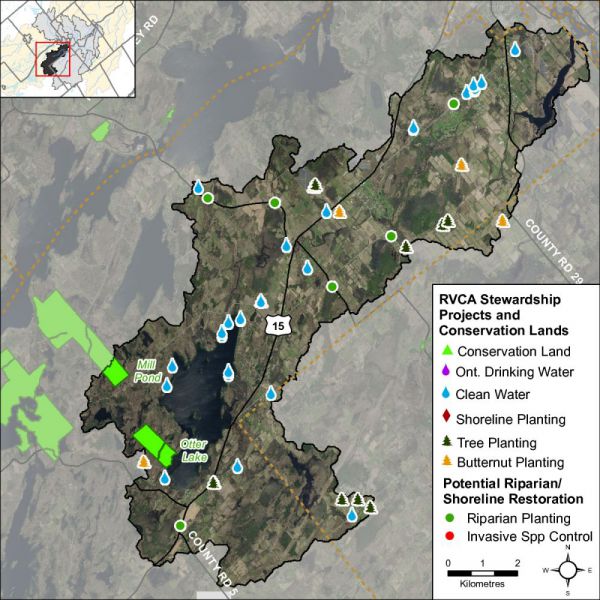
The RVCA and its partners are working to protect and enhance environmental conditions in the Middle Rideau Subwatershed. Figure 81 shows the location of all stewardship projects completed in the Otter Lake and Creek catchment along with sites identified for potential shoreline restoration.
Rural Clean Water Projects
From 2009 to 2014, six septic system replacements and one erosion control project were completed. Between 2003 and 2008, 10 well upgrades, four septic system replacements, one well decommissioning, one erosion control project and one education initiative were carried out along with construction of one fuel storage and handling facility. Prior to 2003, two livestock fencing projects and one septic system replacement were completed. Total value of all 28 projects is $215,494 with $96,685 of that amount funded through grant dollars from the RVCA.
Figure 81 Stewardship and restoration locations
Tree Planting Projects
The location of RVCA Tree Planting Program projects is shown in Figure 81. From 2009 to 2014, 7,082 trees were planted at four sites. Between 2003 and 2008, 1,000 trees were planted at one site and prior to 2003, 12,750 trees were planted at three sites, resulting in the reforestation of 13 hectares. Total value of all eight projects is $62,019 with $22,285 of that amount coming from various fundraising sources.
Through the RVCA Butternut Recovery Program, an additional 110 butternut trees were planted in the Otter Lake and Creek catchment, as part of efforts to introduce healthy seedlings from tolerant butternuts into various locations across Eastern Ontario.
Septic System Re-Inspections
From 2007 to 2015, the Mississippi Rideau Septic System Office performed 66 septic system re-inspections (52 cottages and 14 houses) on Otter Lake in Rideau Lakes Township. Remedial/maintenance work (i.e. pump outs, baffle replacement, work that generally does not require a permit) was recommended for 41 (or 62 percent) of those properties that were inspected, septic system replacements at two properties with more information provided to two other landowners with identified septic system concerns. No specific concerns were noted for the other 21 septic systems that were inspected.
Valley, Stream, Wetland and Hazard Land Regulation
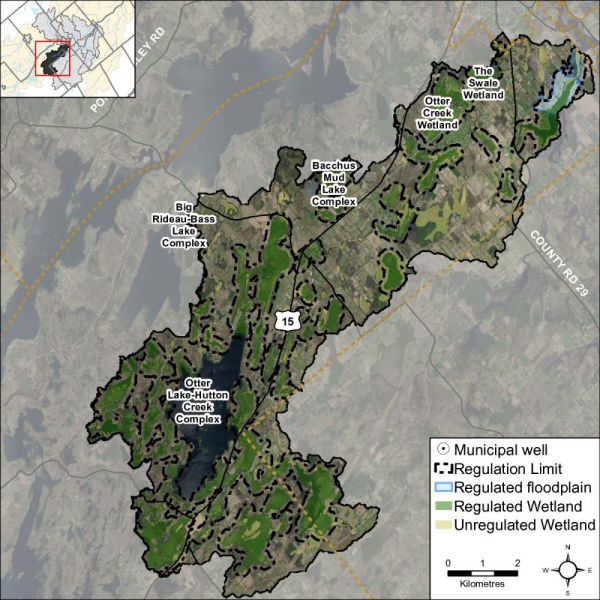
The Otter Lake and Creek catchment covers 89 square kilometres with 37 square kilometres (or 42 percent) of the drainage area being within the regulation limit of Ontario Regulation 174/06 (Fig. 82), giving protection to wetland areas and river or stream valleys that are affected by flooding and erosion hazards.
Wetlands occupy 19.2 sq. km. (or 21 percent) of the catchment. Of these wetlands, 14.5 sq. km (or 76 percent) are designated as provincially significant and included within the RVCA regulation limit. This leaves the remaining 4.7 sq. km (or 24 percent) of wetlands in the catchment outside the regulated area limit.
Of the 137.4 kilometres of stream in the catchment, regulation limit mapping has been plotted along 95.8 kilometers of streams (representing 70 percent of all streams in the catchment). Some of these regulated watercourses (73.1 km or 53 percent of all streams) flow through regulated wetlands; the remaining 22.6 km (or 24 percent) of regulated streams are located outside of those wetlands. Plotting of the regulation limit on the remaining 41.6 km (or 30 percent) of streams requires identification of flood and erosion hazards and valley systems.
Within the regulation limit, “development” and “site alteration” require RVCA permission. The “alteration to waterways” provision of Ontario Regulation 174/06 applies to all watercourses.
Figure 82 RVCA regulation limits
Vulnerable Drinking Water Areas
The Otter Lake and Creek catchment area is considered to have a Highly Vulnerable Aquifer. This means that the nature of the overburden (thin soils, fractured bedrock) does not provide a high level of protection for the underlying groundwater making the aquifer more vulnerable to contaminants released on the surface. The Mississippi-Rideau Source Protection Plan includes policies that focus on the protection of groundwater region-wide due to the fact that most of the region, which encompasses the Mississippi and Rideau watersheds is considered Highly Vulnerable Aquifer.
The catchment area to the south and east of Otter Lake is also considered a Significant Groundwater Recharge Area. This means that there is a volume of water moving from the surface into the ground and groundwater serves either as a municipal drinking water source or supplies a lake or stream ecosystem. The Plan was not required to include policies to specifically address Significant Groundwater Recharge Areas.
For detailed maps and policies that have been developed to protect drinking water sources, please go to the Mississippi-Rideau Source Protection Region website at www.mrsourcewater.ca to view the Mississippi-Rideau Source Protection Plan.
4. Land Cover
Land cover and any change in coverage that has occurred over a six year period is summarized for the Otter Lake and Creek catchment using spatially continuous vector data representing the catchment during the spring of 2008 and 2014. This dataset was developed by the RVCA through heads-up digitization of 20cm DRAPE ortho-imagery at a 1:4000 scale and details the surrounding landscape using 10 land cover classes.
As shown in Table 16, the dominant land cover types in 2008 and 2014 were woodland and crop and pastureland, followed by wetland.
Table 16 Land cover (2008 vs. 2014) in the Otter Lake and Creek catchment
* Does not include treed swamps ** Includes treed swamps
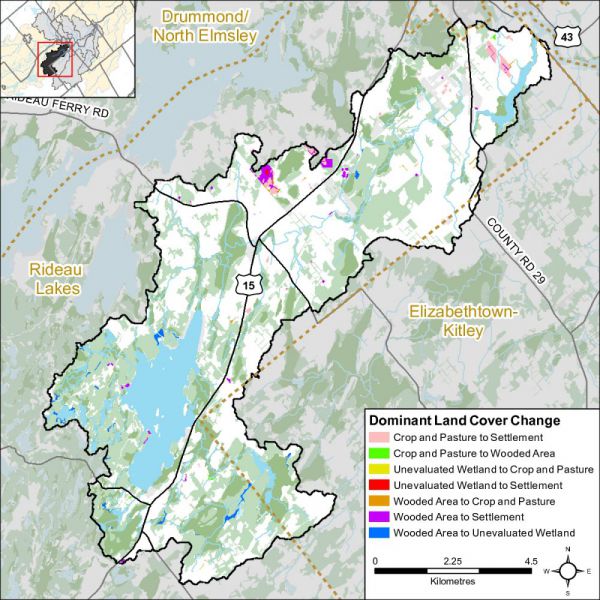
From 2008 to 2014, there was an overall change of 138 hectares (from one land cover class to another), the majority of which can be attributed to the conversion of “crop and pasture” and “woodland” to “settlement” (likely associated with new solar farms) along with “woodland” to “wetland” encroachment in southern areas of the catchment (see Figure 78 for the location of the major changes).
Figure 78 Dominant land cover change in the catchment (2008 to 2014)
Table 17 shows the type of land cover change that has taken place between land cover classes/types from 2008 to 2016. Overall, the net area of woodland change (loss) is relatively small at 73 hectares relative to the remaining area of woodland in the catchment (as of 2014). Similarlyl the net area of crop and pastureland change (loss) is small at 53 hectares relative to the remaining area of crop and pastureland in the catchment (as of 2014).
Table 17 Land cover change in the Otter Lake and Creek catchment (2008-2014)
Woodland Cover
In the Environment Canada Guideline (Third Edition) entitled “How Much Habitat Is Enough?” (here after referred to as the “Guideline”) the opening narrative under the Forest Habitat Guidelines section states that prior to European settlement, forest was the predominant habitat in the Mixedwood Plains ecozone. The remnants of this once vast forest now exist in a fragmented state in many areas (including the Rideau Valley watershed) with woodland patches of various sizes distributed across the settled landscape along with higher levels of forest cover associated with features such as the Frontenac Axis (within the on-Shield areas of the Rideau Lakes and Tay River subwatersheds). The forest legacy, in terms of the many types of wildlife species found, overall species richness, ecological functions provided and ecosystem complexity is still evident in the patches and regional forest matrices (found in the Middle Rideau subwatershed and elsewhere in the Rideau Valley watershed). These ecological features are in addition to other influences which forests have on water quality and stream hydrology including reducing soil erosion, producing oxygen, storing carbon along with many other ecological services that are essential not only for wildlife but for human well-being.
The Guideline also notes that forests provide a great many habitat niches that are in turn occupied by a great diversity of plant and animal species. They provide food, water and shelter for these species - whether they are breeding and resident locally or using forest cover to help them move across the landscape. This diversity of species includes many that are considered to be species at risk. Furthermore, from a wildlife perspective, there is increasing evidence that the total forest cover in a given area is a major predictor of the persistence and size of bird populations, and it is possible or perhaps likely that this pattern extends to other flora and fauna groups. The overall effect of a decrease in forest cover on birds in fragmented landscapes is that certain species disappear and many of the remaining ones become rare, or fail to reproduce, while species adapted to more open and successional habitats, as well as those that are more tolerant to human-induced disturbances in general, are able to persist and in some cases thrive. Species with specialized-habitat requirements are most likely to be adversely affected. The overall pattern of distribution of forest cover, the shape, area and juxtaposition of remaining forest patches and the quality of forest cover also play major roles in determining how valuable forests will be to wildlife and people alike.
The current science generally supports minimum forest habitat requirements between 30 and 50 percent with some limited evidence that the upper limit may be even higher, depending on the organism/species phenomenon under investigation or land-use/resource management planning regime being considered/used.
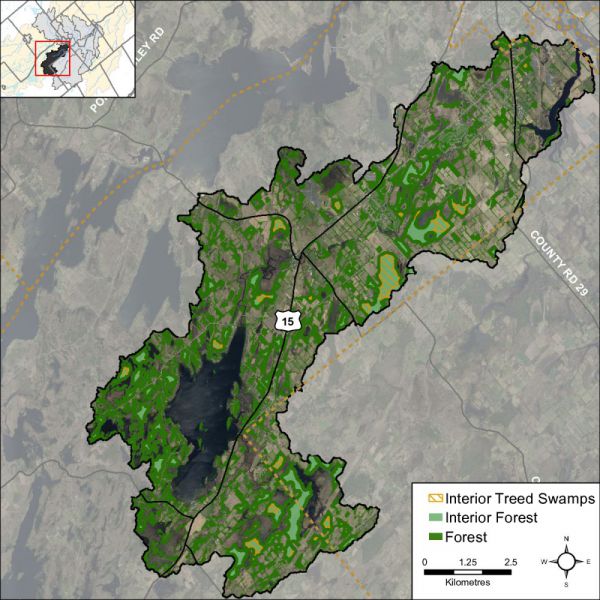
As shown in Figure 79, 35 percent of the Otter Lake and Creek catchment contains 2682 hectares of upland forest and 443 hectares of lowland forest (treed swamps) versus the 34 percent of woodland cover in the Middle Rideau subwatershed. This is greater than the 30 percent of forest cover that is identified as the minimum threshold required to sustain forest birds according to the Guideline and which may only support less than one half of potential species richness and marginally healthy aquatic systems. When forest cover drops below 30 percent, forest birds tend to disappear as breeders across the landscape.
Figure 79 Woodland cover and interior interior (2014)
Woodland (Patch) Size
According to the Ministry of Natural Resources’ Natural Heritage Reference Manual (Second Edition), larger woodlands are more likely to contain a greater diversity of plant and animal species and communities than smaller woodlands and have a greater relative importance for mobile animal species such as forest birds.
Bigger forests often provide a different type of habitat. Many forest birds breed far more successfully in larger forests than they do in smaller woodlots and some rely heavily on forest interior conditions. Populations are often healthier in regions with more forest cover and where forest fragments are grouped closely together or connected by corridors of natural habitat. Small forests support small numbers of wildlife. Some species are “area-sensitive” and tend not to inhabit small woodlands, regardless of forest interior conditions. Fragmented habitat also isolates local populations, especially small mammals, amphibians and reptiles with limited mobility. This reduces the healthy mixing of genetic traits that helps populations survive over the long run (Conserving the Forest Interior. Ontario Extension Notes, 2000).
The Environment Canada Guideline also notes that for forest plants that do not disperse broadly or quickly, preservation of some relatively undisturbed large forest patches is needed to sustain them because of their restricted dispersal abilities and specialized habitat requirements and to ensure continued seed or propagation sources for restored or regenerating areas nearby.
The Natural Heritage Reference Manual continues by stating that a larger size also allows woodlands to support more resilient nutrient cycles and food webs and to be big enough to permit different and important successional stages to co-exist. Small, isolated woodlands are more susceptible to the effects of blowdown, drought, disease, insect infestations, and invasions by predators and non-indigenous plants. It is also known that the viability of woodland wildlife depends not only on the characteristics of the woodland in which they reside, but also on the characteristics of the surrounding landscape where the woodland is situated. Additionally, the percentage of forest cover in the surrounding landscape, the presence of ecological barriers such as roads, the ability of various species to cross the matrix surrounding the woodland and the proximity of adjacent habitats interact with woodland size in influencing the species assemblage within a woodland.
In the Otter Lake and Creek catchment (in 2014), one hundred and twenty seven (37 percent) of the 346 woodland patches are very small, being less than one hectare in size. Another 199 (57 percent) of the woodland patches ranging from one to less than 20 hectares in size tend to be dominated by edge-tolerant bird species. The remaining 20 (six percent of) woodland patches range between 22 and 492 hectares in size. Fourteen of these patches contain woodland between 20 and 100 hectares and may support a few area-sensitive species and some edge intolerant species, but will be dominated by edge tolerant species.
Conversely, six (two percent) of the 346 woodland patches in the drainage area exceed the 100 plus hectare size needed to support most forest dependent, area sensitive birds and are large enough to support approximately 60 percent of edge-intolerant species. Three of these patches top 200 hectares (at 242, 362 and 492 ha), which according to the Environment Canada Guideline will support 80 percent of edge-intolerant forest bird species (including most area sensitive species) that prefer interior forest habitat conditions.
Table 18 presents a comparison of woodland patch size in 2008 and 2014 along with any changes that have occurred over that time. A decrease (of 64 ha) has been observed in the overall woodland patch area between the two reporting periods with most change occurring in the 20 to 50 hectare woodland patch size class range.
Table 18 Woodland Patches in the Otter Lake and Creek Catchment (2008 and 2014)
*Includes treed swamps
Woodland (Forest) Interior Habitat
The forest interior is habitat deep within woodlands. It is a sheltered, secluded environment away from the influence of forest edges and open habitats. Some people call it the “core” or the “heart” of a woodland. The presence of forest interior is a good sign of woodland health, and is directly related to the woodland’s size and shape. Large woodlands with round or square outlines have the greatest amount of forest interior. Small, narrow woodlands may have no forest interior conditions at all. Forest interior habitat is a remnant natural environment, reminiscent of the extensive, continuous forests of the past. This increasingly rare forest habitat is now a refuge for certain forest-dependent wildlife; they simply must have it to survive and thrive in a fragmented forest landscape (Conserving the Forest Interior. Ontario Extension Notes, 2000).
The Natural Heritage Reference Manual states that woodland interior habitat is usually defined as habitat more than 100 metres from the edge of the woodland and provides for relative seclusion from outside influences along with a moister, more sheltered and productive forest habitat for certain area sensitive species. Woodlands with interior habitat have centres that are more clearly buffered against the edge effects of agricultural activities or more harmful urban activities than those without.
In the Otter Lake and Creek catchment (in 2014), the 346 woodland patches contain 95 forest interior patches (Figure 79) that occupy three percent (295 ha.) of the catchment land area (versus the five percent of interior forest in the Middle Rideau Subwatershed). This is below the ten percent figure referred to in the Environment Canada Guideline that is considered to be the minimum threshold for supporting edge intolerant bird species and other forest dwelling species in the landscape.
Most patches (91) have less than 10 hectares of interior forest, 59 of which have small areas of interior forest habitat less than one hectare in size. The remaining four patches contain interior forest ranging between 10 and 66 hectares in area.
Between 2008 and 2014, there has been a change in the number of woodland patches containing smaller areas of interior habitat (Table xx). For example, there has been an increase of 41 woodlands containing less than one hectare of interior forest over this period and 18 woodlands with one to 10 hectares of interior habitat.
Table 19 Woodland Interior in the Otter Lake and Creek catchment (2008 and 2014)
Wetland Cover
Wetlands are habitats forming the interface between aquatic and terrestrial systems. They are among the most productive and biologically diverse habitats on the planet. By the 1980s, according to the Natural Heritage Reference Manual, 68 percent of the original wetlands south of the Precambrian Shield in Ontario had been lost through encroachment, land clearance, drainage and filling.
Wetlands perform a number of important ecological and hydrological functions and provide an array of social and economic benefits that society values. Maintaining wetland cover in a watershed provides many ecological, economic, hydrological and social benefits that are listed in the Reference Manual and which may include:
- contributing to the stabilization of shorelines and to the reduction of erosion damage through the mitigation of water flow and soil binding by plant roots
- mitigating surface water flow by storing water during periods of peak flow (such as spring snowmelt and heavy rainfall events) and releasing water during periods of low flow (this mitigation of water flow also contributes to a reduction of flood damage)
- contributing to an improved water quality through the trapping of sediments, the removal and/or retention of excess nutrients, the immobilization and/or degradation of contaminants and the removal of bacteria
- providing renewable harvesting of timber, fuel wood, fish, wildlife and wild rice
- contributing to a stable, long-term water supply in areas of groundwater recharge and discharge
- providing a high diversity of habitats that support a wide variety of plants and animals
- acting as “carbon sinks” making a significant contribution to carbon storage
- providing opportunities for recreation, education, research and tourism
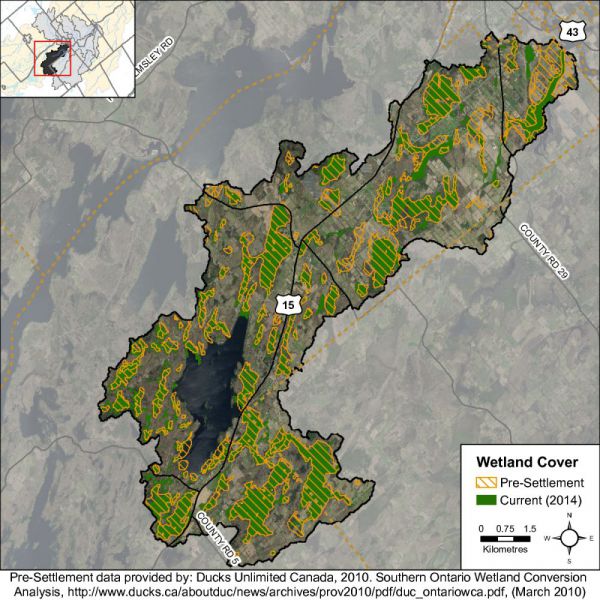
Historically, the overall wetland coverage within the Great Lakes basin exceeded 10 percent, but there was significant variability among watersheds and jurisdictions, as stated in the Environment Canada Guideline. In the Rideau Valley Watershed, it has been estimated that pre-settlement wetland cover averaged 35 percent using information provided by Ducks Unlimited Canada (2010) versus the 21 percent of wetland cover existing in 2014 derived from DRAPE imagery analysis.
While there has been a reported three percent decrease in wetland cover in the Otter Lake and Creek catchment from pre-settlement times, the remaining wetland cover in 2014 remains above the ecological thresholds cited in the Environment Canada Guideline. Nonetheless, in order to maintain critical hydrological, ecological functions along with related recreational and economic benefits provided by these wetland habitats in the catchment, a “no net loss” of currently existing wetlands should be employed to ensure the continued provision of tangible benefits accruing from them for landowners and surrounding communities.
Using the same dataset, it is estimated that pre-settlement (historic) wetland cover averaged 32 percent in the Middle Rideau subwatershed versus the 27 percent of cover existing in 2014. This decline in wetland cover is also evident in the Otter Lake and Creek catchment (as seen in Figure 80) where there has been a three percent decrease in the area of wetland cover from pre-settlement times to the present (as summarized in Table 20).
Figure 80 Wetland cover (pre-settlement to 2014)
While there has been a reported decrease in wetland cover in the Otter Lake and Creek catchment from pre-settlement times, the remaining wetland cover in 2014 remains above the ecological thresholds cited in the Environment Canada Guideline. Nonetheless, in order to maintain critical hydrological, ecological functions along with related recreational and economic benefits provided by these wetland habitats in the catchment, a “no net loss” of currently existing wetlands should be employed to ensure the continued provision of tangible benefits accruing from them for landowners and surrounding communities.
Table 20 Wetland cover in the Middle Rideau subwatershed and Otter Lake and Creek catchment (Historic to 2014)
3. Otter Creek and Lake Riparian Conditions
Shoreline Buffer Land Cover Evaluation
The riparian or shoreline zone is that special area where land meets water. Well-vegetated shorelines are critically important in protecting water quality and creating healthy aquatic habitats, lakes and rivers. Natural shorelines intercept sediments and contaminants that could impact water quality conditions and harm fish habitat in streams. Well established buffers protect the banks against erosion, improve habitat for fish by shading and cooling the water and provide protection for birds and other wildlife that feed and rear young near water. A recommended target (from Environment Canada’s Guideline: How Much Habitat is Enough?) is to maintain a minimum 30 metre wide vegetated buffer along at least 75 percent of the length of both sides of rivers, creeks and streams.
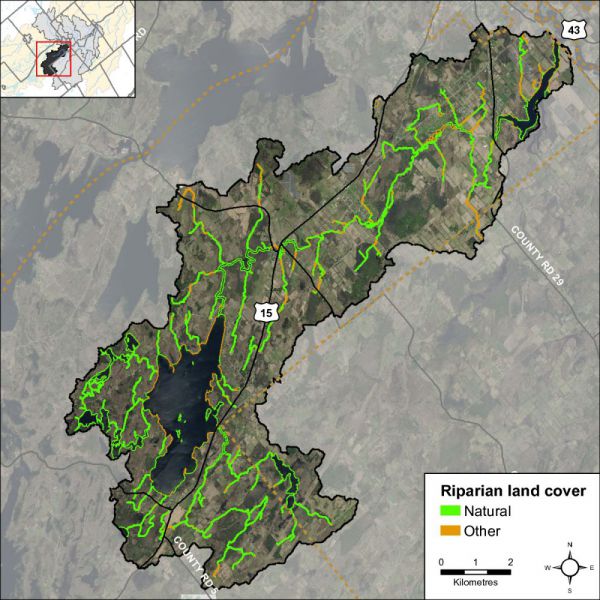
Figure 38 shows the extent of the naturally vegetated riparian zone along a 30 metre wide strip of the shoreline of Otter Lake, Otter Creek and its tributaries. This information is derived from a dataset developed by the RVCA’s Land Cover Classification Program through heads-up digitization of 20cm DRAPE ortho-imagery at a 1:4000 scale, which details the catchment landscape using 10 land cover classes.
Figure 38 Natural and other riparian land cover in the Otter Lake and Creek catchment
This analysis shows that the Otter Lake and Creek catchment riparian buffer is comprised of wetland (56 percent), woodland (24 percent), crop and pastureland (10 percent), settlement areas (seven percent) and transportation routes (three percent). Along Otter Creek and its tributaries, the riparian buffer is comprised of woodland (60 percent), roads (17 percent), wetland (15 percent), crop and pastureland (six percent) and settlement areas (two percent). Around Otter Lake itself, the shoreline buffer is dominated by cottages, houses and recreational camps (50 percent) with the remainder composed of woodland (23 percent), wetland (22 percent) and roads (five percent).
Additional statistics for the Otter Lake and Creek catchment and Otter Lake itself are presented in Tables 13 and 14. Of particular interest is the observed increase in the area of “Settlement” along the shoreline of Otter Lake over a six year period.
Table 13 Riparian land cover (2008 vs. 2014) in the Otter Lake and Creek catchment
Table 14 Riparian land cover (2008 vs. 2014) around Otter Lake
Otter Creek Overbank Zone
Riparian Buffer Width Evaluation
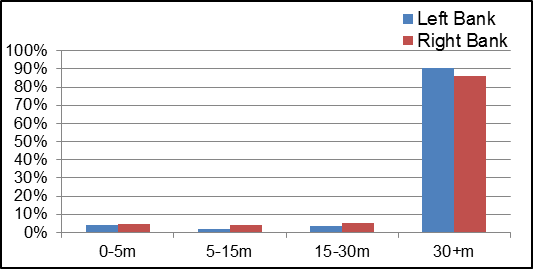
Figure 39 demonstrates the buffer conditions of the left and right banks separately. Otter Creek had a buffer of greater than 30 meters along 86 percent of the right bank and 91 percent of the left bank.
Figure 39 Riparian buffer evaluation along Otter Creek
Adjacent Land Use
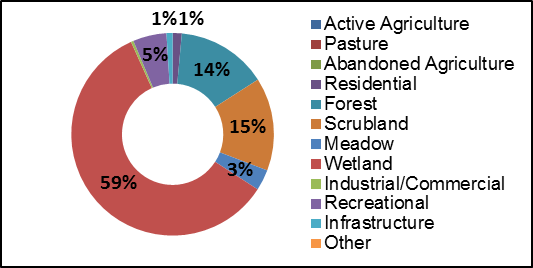
The RVCA’s Stream Characterization Program identifies seven different land uses beside Otter Creek (Figure 40). Surrounding land use is considered from the beginning to end of the survey section (100 m) and up to 100m on each side of the creek. Land use outside of this area is not considered for the surveys but is nonetheless part of the subwatershed and will influence the creek. Natural areas made up 91 percent of the stream, characterized by wetlands, forest, scrubland and meadow. The remaining land use consisted of infrastructure in the form of residential, recreational and road crossings.
Figure 40 Land Use along Otter Creek
Otter Creek Shoreline Zone
Instream Erosion
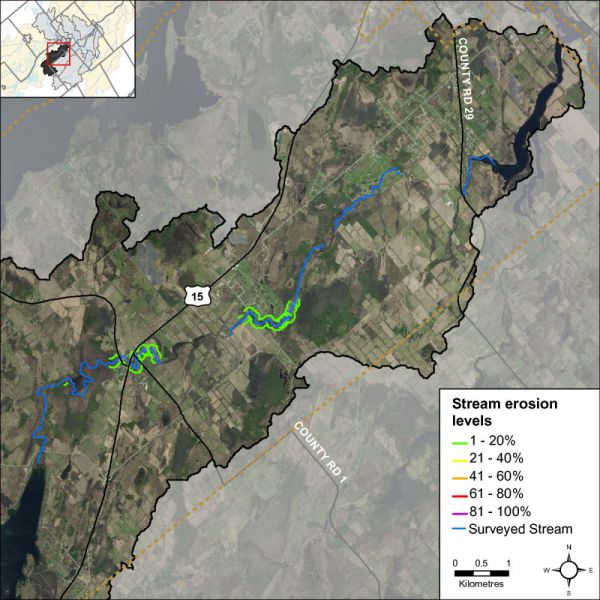
Erosion is a normal, important stream process and may not affect actual bank stability; however, excessive erosion and deposition of sediment within a stream can have a detrimental effect on important fish and wildlife habitat. Poor bank stability can greatly contribute to the amount of sediment carried in a waterbody as well as loss of bank vegetation due to bank failure, resulting in trees falling into the stream and the potential to impact instream migration. Figure 41 shows low levels of erosion along Otter Creek.
Figure 41 Erosion along Otter Creek
Undercut Stream Banks
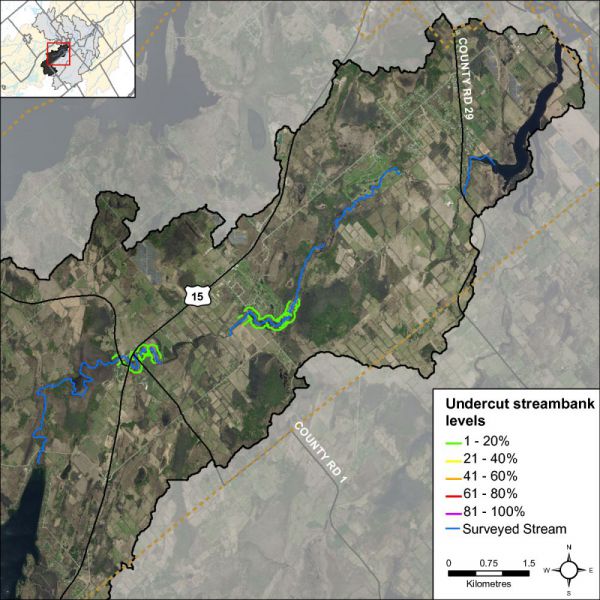
Undercut banks are a normal and natural part of stream function and can provide excellent refuge areas for fish. Figure 42 shows that Otter Creek had low levels of undercut banks.
Figure 42 Undercut stream banks along Otter Creek
Stream Shading
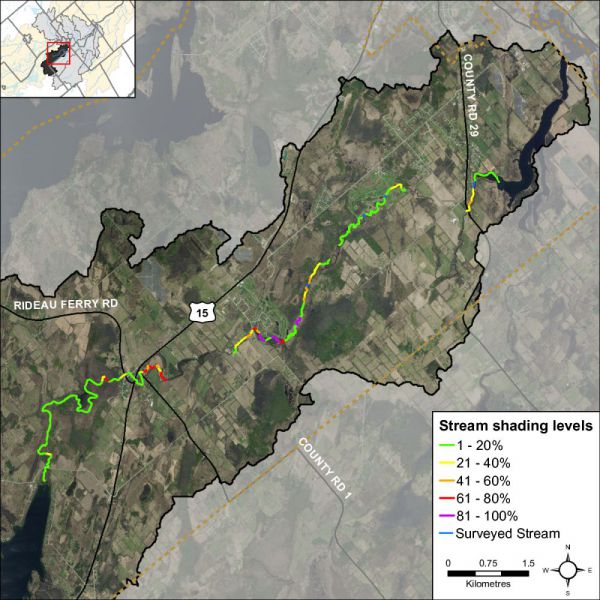
Grasses, shrubs and trees all contribute towards shading a stream. Shade is important in moderating stream temperature, contributing to food supply and helping with nutrient reduction within a stream. Figure 43 shows highly variable stream shading conditions ranging from low levels to high levels along Otter Creek.
Figure 43 Stream shading along Otter Creek
Instream Woody Debris
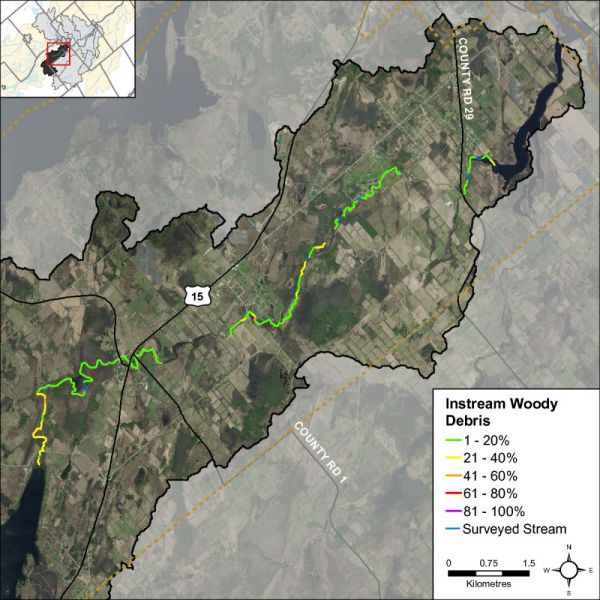
Figure 44 shows that the majority of Otter Creek had low to moderate levels of instream woody debris in the form of branches and trees. Instream woody debris is important for fish and benthic invertebrate habitat, by providing refuge and feeding areas.
Figure 44 Instream woody debris along Otter Creek
Overhanging Trees and Branches
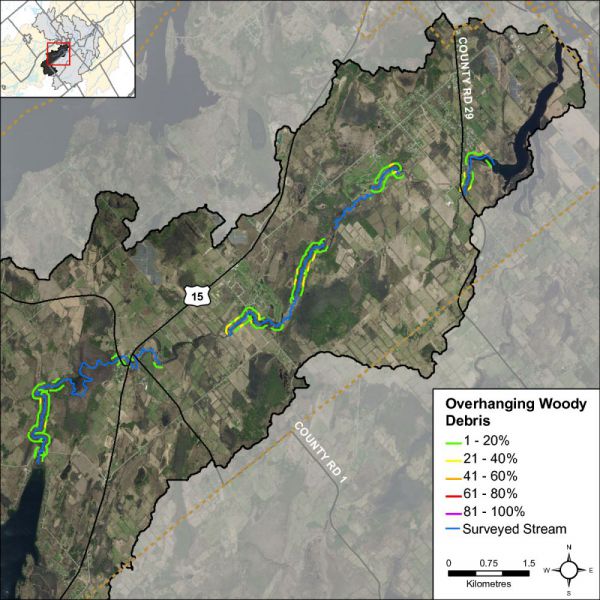
Figure 45 shows low levels of overhanging branches and trees along Otter Creek. Overhanging branches and trees provide a food source, nutrients and shade which helps to moderate instream water temperatures.
Figure 45 Overhanging trees and branches along Otter Creek
Anthropogenic Alterations
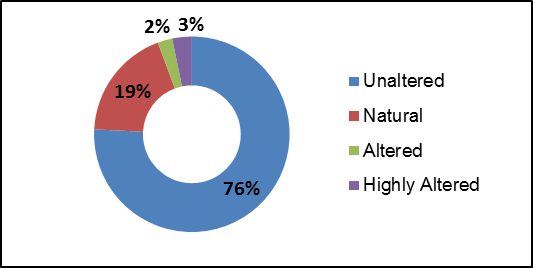
Figure 46 shows 76 percent of Otter Creek remains “unaltered” with no anthropogenic alterations. Nineteen percent of Otter Creek was classified as natural with minor anthropogenic changes, two percent was classified as altered and three percent of its length was considered highly altered in the form of road crossings.
Figure 46 Anthropogenic alterations along Otter Creek
Otter Creek Instream Aquatic Habitat
Benthic Invertebrates
Freshwater benthic invertebrates are animals without backbones that live on the stream bottom and include crustaceans such as crayfish, molluscs and immature forms of aquatic insects. Benthos represent an extremely diverse group of aquatic animals and exhibit wide ranges of responses to stressors such as organic pollutants, sediments and toxicants, which allows scientists to use them as bioindicators. As part of the Ontario Benthic Biomonitoring Network (OBBN), the RVCA has been collecting benthic invertebrates at the County Road 29 site on Otter Creek since 2003. Monitoring data is analyzed for each sample site and the results are presented using the Family Biotic Index, Family Richness and percent Ephemeroptera, Plecoptera and Trichoptera.
Hilsenhoff Family Biotic Index
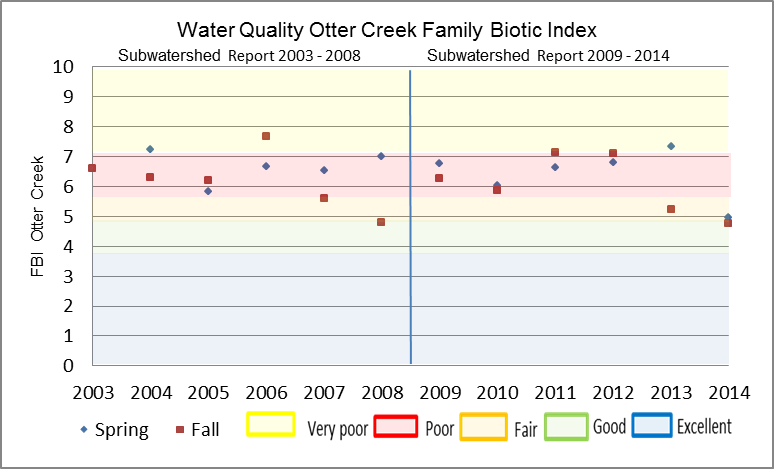
The Hilsenhoff Family Biotic Index (FBI) is an indicator of organic and nutrient pollution and provides an estimate of water quality conditions for each site using established pollution tolerance values for benthic invertebrates. FBI results for Otter Creek are separated by reporting period 2003 to 2008 and 2009 to 2014. “Very Poor” to “Fair” water quality conditions being observed at the Otter Creek sample location for the period from 2003 to 2014 (Fig.47) using a grading scheme developed by Conservation Authorities in Ontario for benthic invertebrates.
Figure 47 Hilsenhoff Family Biotic Index on Otter Creek
Family Richness
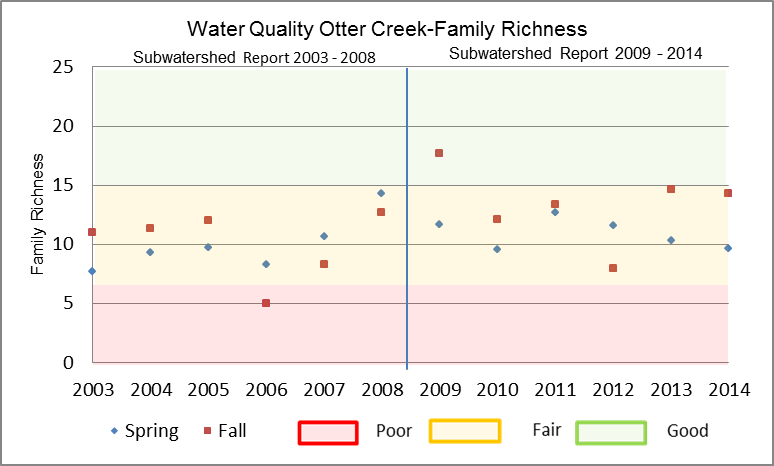
Family Richness measures the health of the community through its diversity and increases with increasing habitat diversity suitability and healthy water quality conditions. Family Richness is equivalent to the total number of benthic invertebrate families found within a sample. Although the family richness appears to be fair for the Otter Creek sample location the samples are dominated by species that are moderately tolerant and tolerant to poor water quality conditions. Otter Creek is reported to have “Fair” family richness (Fig.48).
Figure 48 Family Richness in Otter Creek
EPT
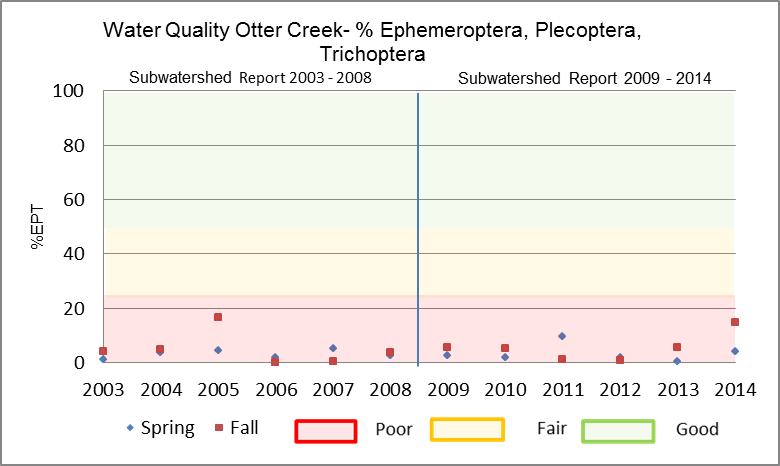
Ephemeroptera (Mayflies), Plecoptera (Stoneflies), and Trichoptera (Caddisflies) are species considered to be very sensitive to poor water quality conditions. High abundance of these organisms is generally an indication of good water quality conditions at a sample location. The community structure is dominated by species that are not sensitive to poor water quality conditions. As a result, the EPT indicates that Otter Creek is reported to have “Poor” water quality (Fig.49) from 2003 to 2014.
Figure 49 EPT in Otter Creek
Overall Otter Creek has a water quality rating from a benthic invertebrate perspective of “Poor” from 2003 to 2014.
Habitat Complexity
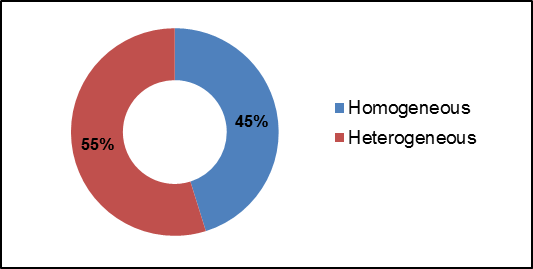
Streams are naturally meandering systems and move over time; there are varying degrees of habitat complexity, depending on the creek. Examples of habitat complexity include variable habitat types such as pools and riffles as well as substrate variability and woody debris structure. A high percentage of habitat complexity (heterogeneity) typically increases the biodiversity of aquatic organisms within a system. Fifty five percent of Otter Creek was considered heterogeneous, as shown in Figure 50.
Figure 50 Habitat complexity along Otter Creek
Instream Substrate
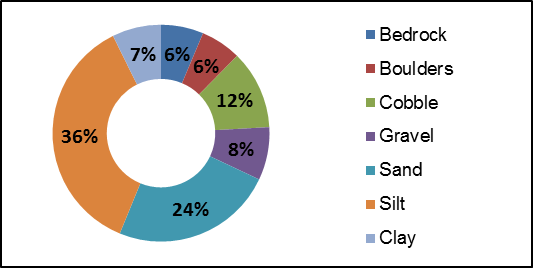
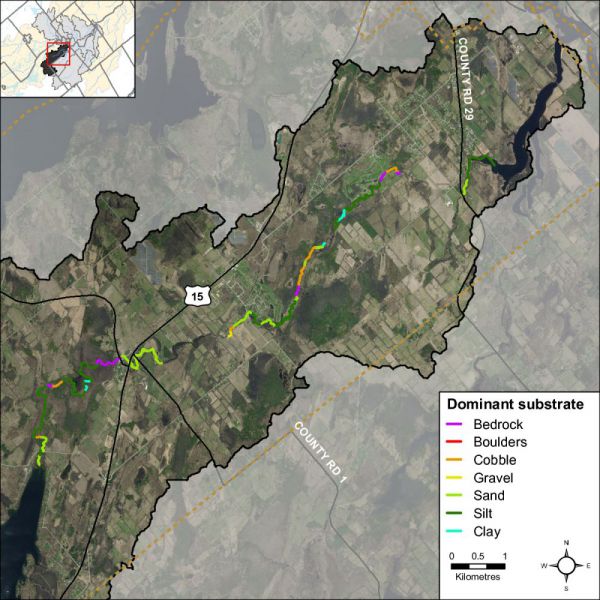
Diverse substrate is important for fish and benthic invertebrate habitat because some species have specific substrate requirements and for example will only reproduce on certain types of substrate. Figure 51 shows that 36 percent of the substrate observed on Otter Creek was dominated by silt. Overall substrate conditions were highly variable along Otter Creek. Figure 52 shows the dominant substrate along Otter Creek.
Figure 51 Instream substrate along Otter Creek
Figure 52 Dominant instream substrate along Otter Creek
Cobble and Boulder Habitat
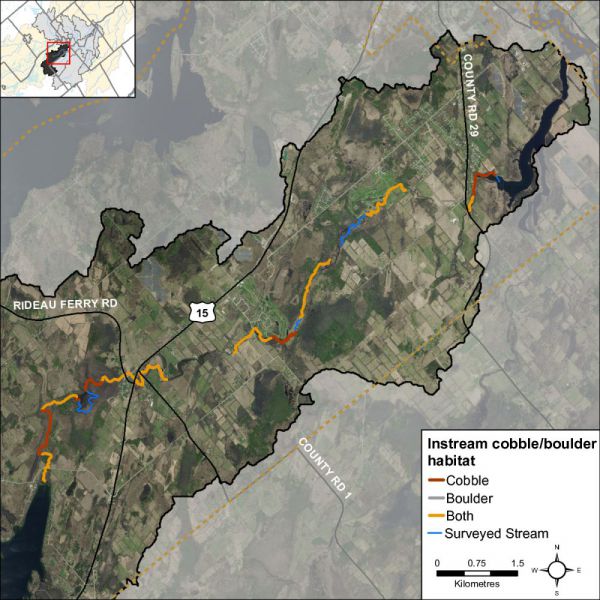
Boulders create instream cover and back eddies for large fish to hide and/or rest out of the current. Cobble provides important spawning habitat for certain fish species like walleye and various shiner species who are an important food source for larger fish. Cobble can also provide habitat conditions for benthic invertebrates that are a key food source for many fish and wildlife species. Figure 53 shows where cobble and boulder substrate are found in Otter Creek.
Figure 53 Instream cobble and boulder along Otter Creek
Instream Morphology
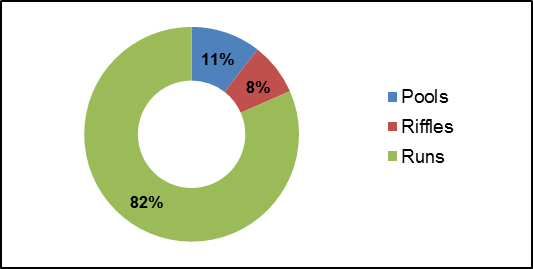
Pools and riffles are important habitat features for fish. Riffles are areas of agitated water and they contribute higher dissolved oxygen to the stream and act as spawning substrate for some species of fish, such as walleye. Pools provide shelter for fish and can be refuge pools in the summer if water levels drop and water temperature in the creek increases. Pools also provide important over wintering areas for fish. Runs are usually moderately shallow, with unagitated surfaces of water and areas where the thalweg (deepest part of the channel) is in the center of the channel.
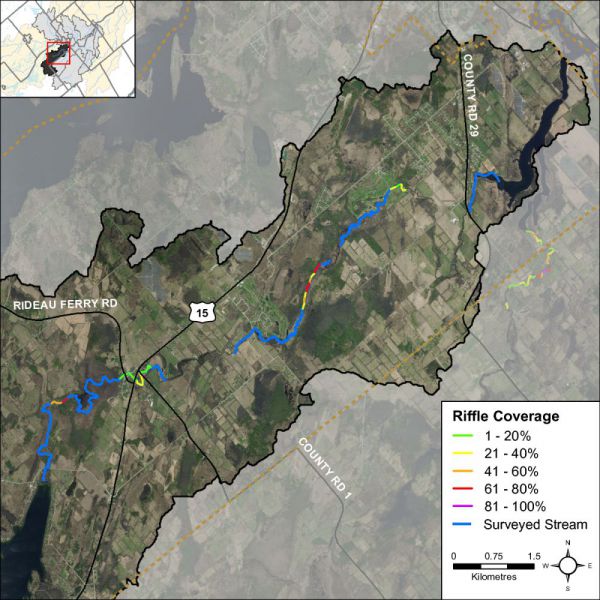
Figure 54 shows that Otter Creek is variable; 82 percent consists of runs, 11 percent pools and 8 percent riffles. Figure 55 shows where riffle habitat is located along Otter Creek.
Figure 54 Instream morphology along Otter Creek
Figure 55 shows where riffle habitat was observed along Otter Creek
Vegetation Type
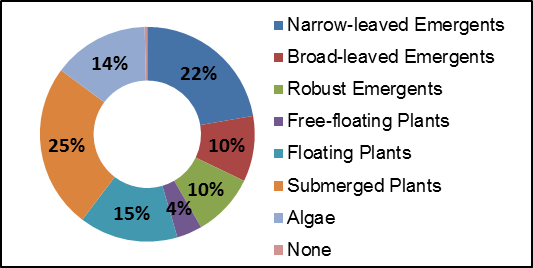
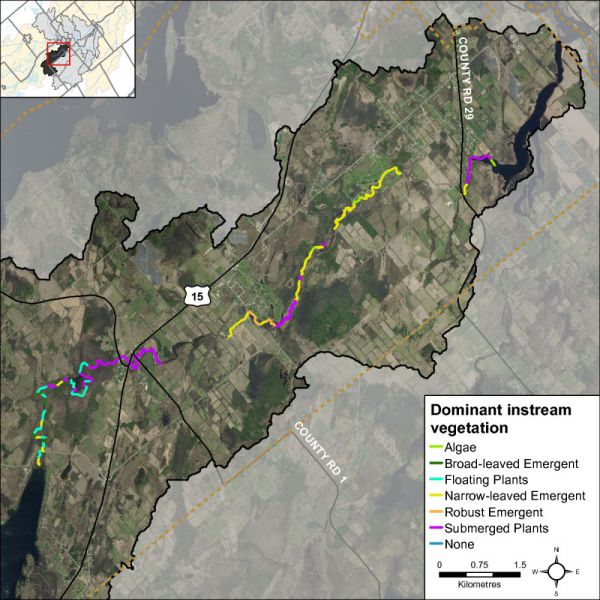
Instream vegetation provides a variety of functions and is a critical component of the aquatic ecosystem. For example emergent plants along the shoreline can provide shoreline protection from wave action and important rearing habitat for species of waterfowl. Submerged plants provide habitat for fish to find shelter from predator fish while they feed. Floating plants such as water lilies shade the water and can keep temperatures cool while reducing algae growth. Otter Creek had high levels of diversity of instream vegetation. The dominant vegetation type recorded at twenty-five percent consisted of submerged plants. Figure 56 depicts the plant community structure for Otter Creek. Figure 57 shows the dominant vegetation community for each section surveyed along Otter Creek.
Figure 56 Vegetation type along Otter Creek
Figure 57 Dominant vegetation type along Otter Creek
Instream Vegetation Abundance
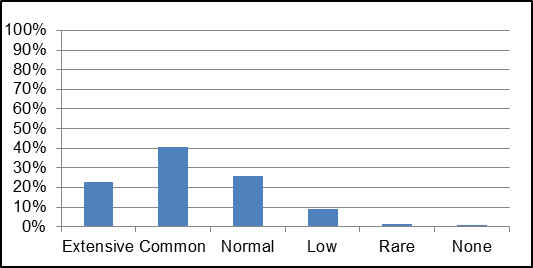
Instream vegetation is an important factor for a healthy stream ecosystem. Vegetation helps to remove contaminants from the water, contributes oxygen to the stream, and provides habitat for fish and wildlife. Too much vegetation can also be detrimental. Figure 58 demonstrates that Otter Creek had common to normal levels of instream vegetation for most of its length.
Figure 58 Instream vegetation abundance along Otter Creek
Invasive Species
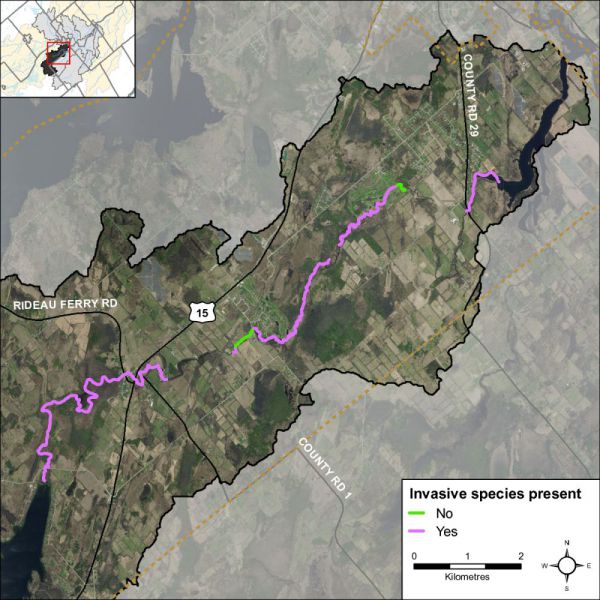
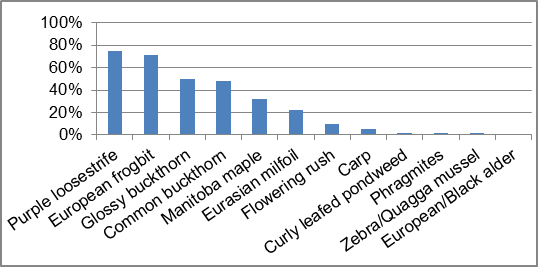
Invasive species can have major implications on streams and species diversity. Invasive species are one of the largest threats to ecosystems throughout Ontario and can out compete native species, having negative effects on local wildlife, fish and plant populations. Ninety four percent of the sections surveyed along Otter Creek had invasive species (Fig.59). The invasive species observed in Otter Creek were European frogbit, purple loosestrife, glossy and common buckthorn, Eurasian milfoil, flowering rush, carp, curly leafed pondweed, phragmites, zebra mussels, European/black alder and Manitoba maple. Figure 60 shows the frequency of the invasive species observed along Otter Creek.
Figure 59 Invasive species observed along Otter Creek
Figure 60 Invasive species frequency by type along Otter Creek
Water Chemistry
During the stream characterization survey, a YSI probe is used to collect water chemistry information. Dissolved oxygen, conductivity and pH are measured at the start and end of each section.
Dissolved Oxygen
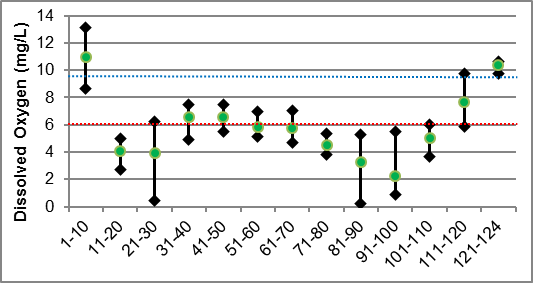
Dissolved oxygen is a measure of the amount of oxygen dissolved in water. The Canadian Environmental Quality Guidelines of the Canadian Council of Ministers of the Environment (CCME) suggest that for the protection of aquatic life the lowest acceptable dissolved oxygen concentration should be 6 mg/L for warmwater biota and 9.5 mg/L for coldwater biota (CCME, 1999). Figure 61 shows that the dissolved oxygen in the Otter Creek was well below the threshold for warmwater biota in several reaches of the system. The average dissolved oxygen levels observed within the main stem of Otter Creek was 5.90mg/L which is below the 6mg/L minimum that is recommended for warmwater biota.
Figure 61 Dissolved oxygen ranges in Otter Creek
Conductivity
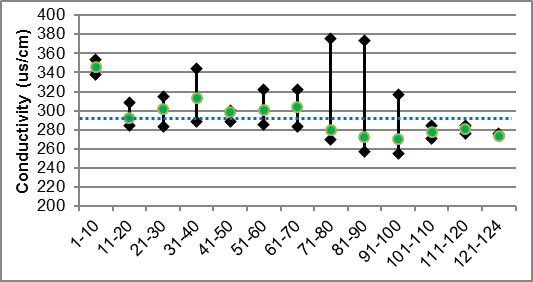
Conductivity in streams is primarily influenced by the geology of the surrounding environment, but can vary drastically as a function of surface water runoff. Currently there are no CCME guideline standards for stream conductivity, however readings which are outside the normal range observed within the system are often an indication of unmitigated discharge and/or stormwater input. The average conductivity observed within the main stem of Otter Creek was 294 µs/cm. Figure 62 shows that the conductivity readings for Otter Creek.
Figure 62 Conductivity ranges in Otter Creek
pH
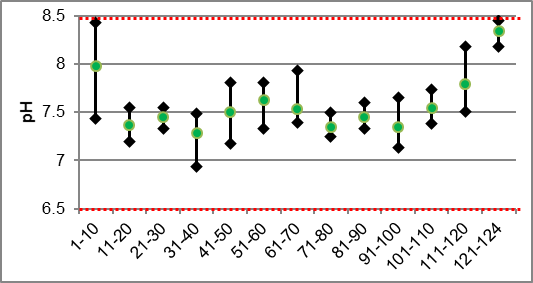
Based on the PWQO for pH, a range of 6.5 to 8.5 should be maintained for the protection of aquatic life. Average pH values for Otter Creek averaged 7.6 thereby meeting the provincial standard (Fig.63).
Figure 63 pH ranges in Otter Creek
Thermal Regime
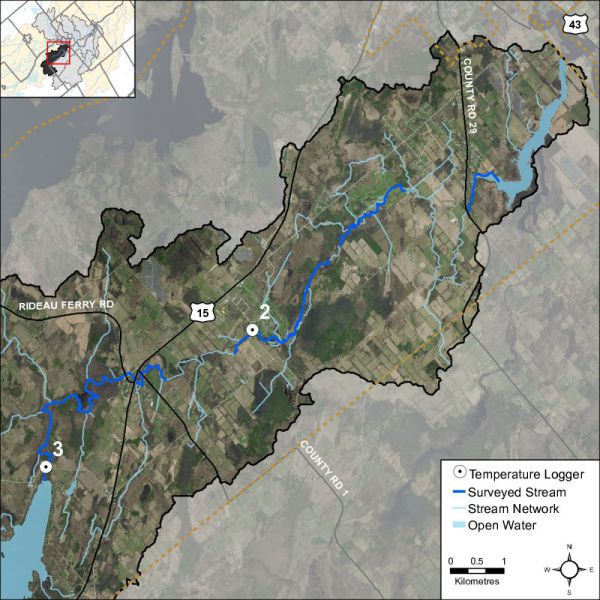
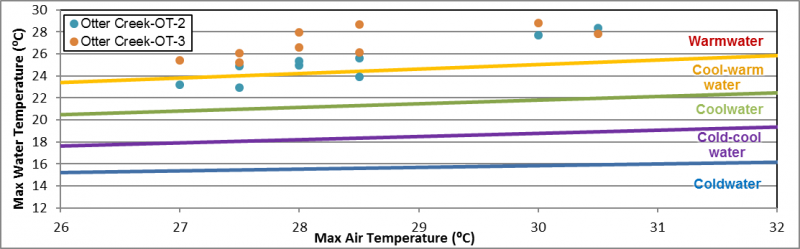
Many factors can influence fluctuations in stream temperature, including springs, tributaries, precipitation runoff, discharge pipes and stream shading from riparian vegetation. Water temperature is used along with the maximum air temperature (using the Stoneman and Jones method) to classify a watercourse as either warm water, cool water or cold water. Figure 64 shows the location of temperatures loggers at two sampling locations along Otter Creek.
Figure 64 Temperature loggers in Otter Creek
Analysis of the data collected indicates that Otter Creek is classified as a warm water system with cool to warm water reaches (Fig.65). Each point on the graph represents a temperature that meets the following criteria:
- Sampling dates between July 1st and September 7th
- Sampling date is preceded by two consecutive days above 24.5 °C, with no rain
- Water temperatures are collected at 4pm
- Air temperature is recorded as the max temperature for that day
Figure 65 Temperature logger data for two sites on Otter Creek
Groundwater
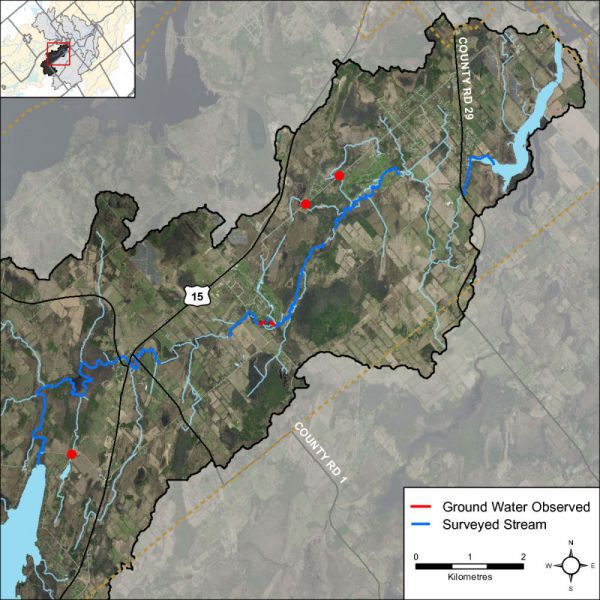
Groundwater discharge areas can influence stream temperature, contribute nutrients, and provide important stream habitat for fish and other biota. During stream surveys, indicators of groundwater discharge are noted when observed. Indicators include: springs/seeps, watercress, iron staining, significant temperature change and rainbow mineral film. Figure 66 shows areas where one or more of the above groundwater indicators were observed during stream surveys and headwater assessments.
Figure 66 Groundwater indicator observations in the Otter Creek catchment
Headwaters Drainage Features Assessment
The RVCA Stream Characterization program assessed Headwater Drainage Features for the Middle Rideau subwatershed in 2014. This protocol measures zero, first and second order headwater drainage features (HDF). It is a rapid assessment method characterizing the amount of water, sediment transport, and storage capacity within headwater drainage features (HDF). RVCA is working with other Conservation Authorities and the Ministry of Natural Resources and Forestry to implement the protocol with the goal of providing standard datasets to support science development and monitoring of headwater drainage features. An HDF is a depression in the land that conveys surface flow. Additionally, this module provides a means of characterizing the connectivity, form and unique features associated with each HDF (OSAP Protocol, 2013). In 2014, the program sampled 17 sites in the Otter Creek catchment area. Figure 67 shows the headwater drainage feature sampling location in the catchment.
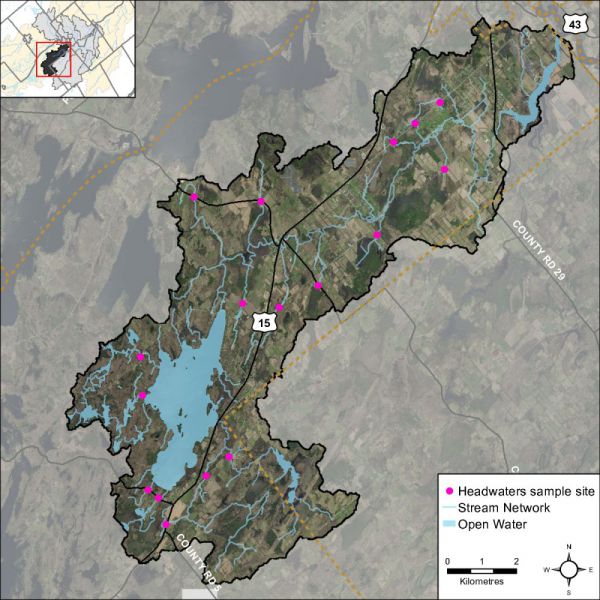
Figure 67 Locations of the headwater sampling sites in the Otter Creek catchment
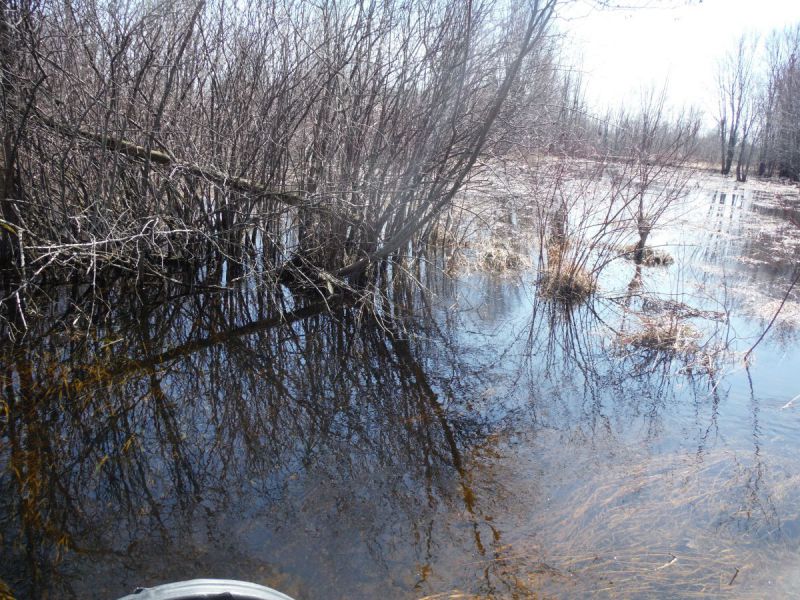
Spring photo of a headwater drainage feature along Bass Road in the Otter Creek catchment
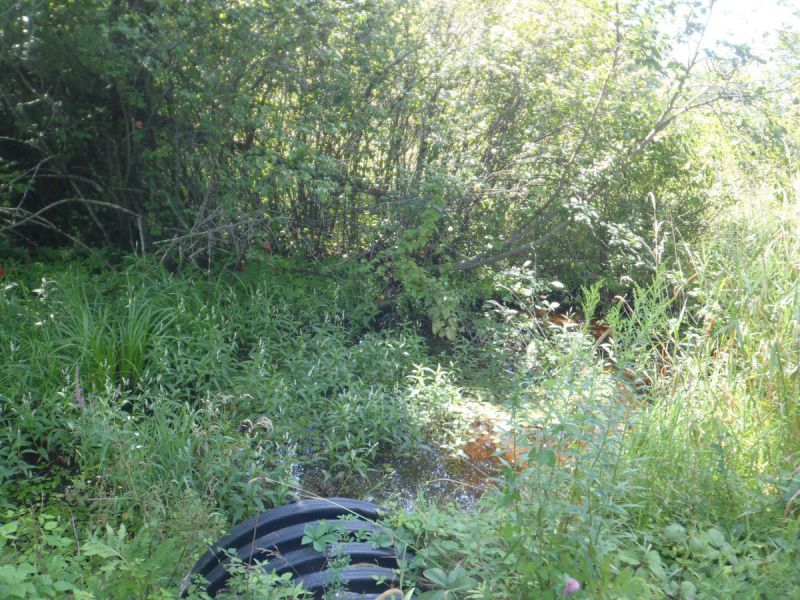
Summer photo of a headwater drainage feature along Bass Road in the Otter Creek catchment
Headwater Feature Type
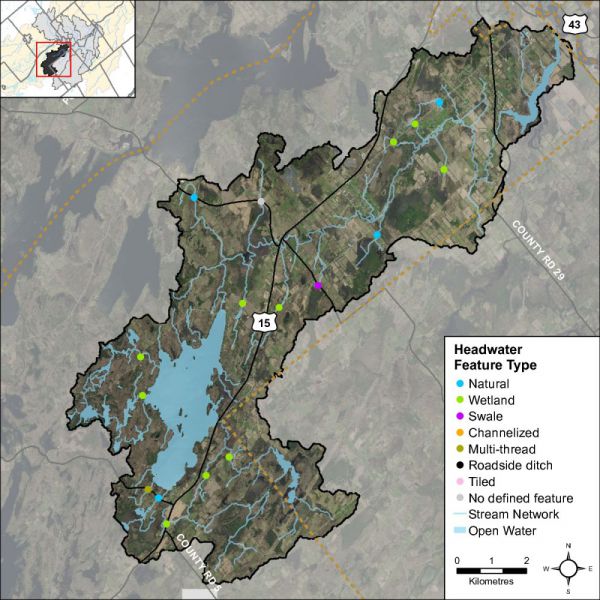
The headwater sampling protocol assesses the feature type in order to understand the function of each feature. The evaluation includes the following classifications: defined natural channel, channelized or constrained, multi-thread, no defined feature, tiled, wetland, swale, roadside ditch and pond outlet. By assessing the values associated with the headwater drainage features in the catchment area we can understand the ecosystem services that they provide to the watershed in the form of hydrology, sediment transport, and aquatic and terrestrial functions. The Otter Creek catchment is dominated by natural channel and wetland headwater drainage features. Figure 68 shows the feature type of the primary feature at the sampling locations.
Figure 68 Headwater feature type in Otter Creek
Headwater Feature Flow
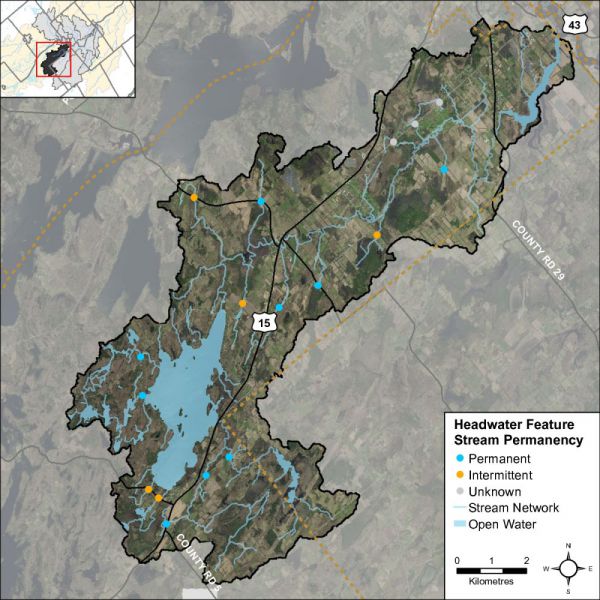
The observed flow condition within headwater drainage features can be highly variable depending on timing relative to the spring freshet, recent rainfall, soil moisture, etc. Flow conditions are assessed in the spring and in the summer to determine if features are perennial and flow year round, if they are intermittent and dry up during the summer months or if they are ephemeral systems that do not flow regularly and generally respond to specific rainstorm events or snowmelt. Flow conditions in headwater systems can change from year to year depending on location precipitation patterns. Figure 69 shows the observed flow conditions at the sampling locations in the Otter Creek catchment.
Figure 69 headwater flow type in Otter Creek
Headwater Feature Channel Modifications
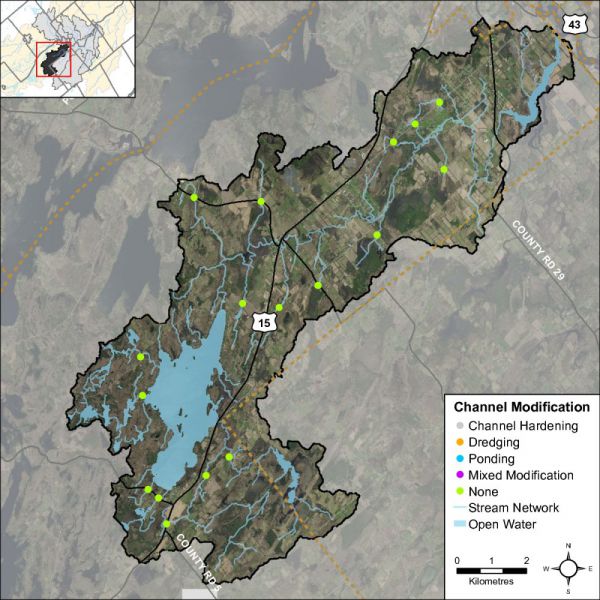
Channel modifications were assessed at each headwater drainage feature sampling location. Modifications include channelization, dredging, hardening and realignments. The sampling locations for the Otter Creek catchment area were classified as having no channel modifications. Figure 70 shows the channel modifications observed at the sampling locations for Otter Creek.
Figure 70 headwater feature channel modifications in Otter Creek
Headwater Feature Vegetation
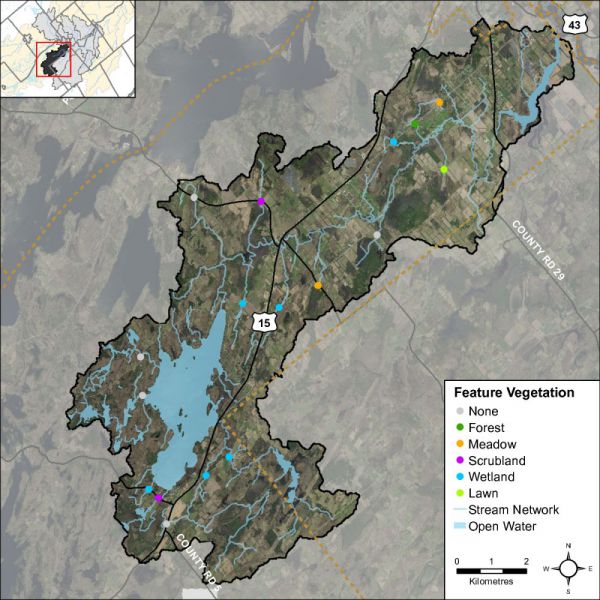
Headwater feature vegetation evaluates the type of vegetation that is found within the drainage feature. The type of vegetated within the channel influences the aquatic and terrestrial ecosystem values that the feature provides. For some types of headwater features the vegetation within the feature plays a very important role in flow and sediment movement and provides wildlife habitat. The following classifications are evaluated no vegetation, lawn, wetland, meadow, scrubland and forest. Figure 71 depicts the dominant vegetation observed at the sampled headwater sites in the Otter Creek catchment.
Figure 71 headwater feature vegetation types in Otter Creek
Headwater Feature Riparian Vegetation
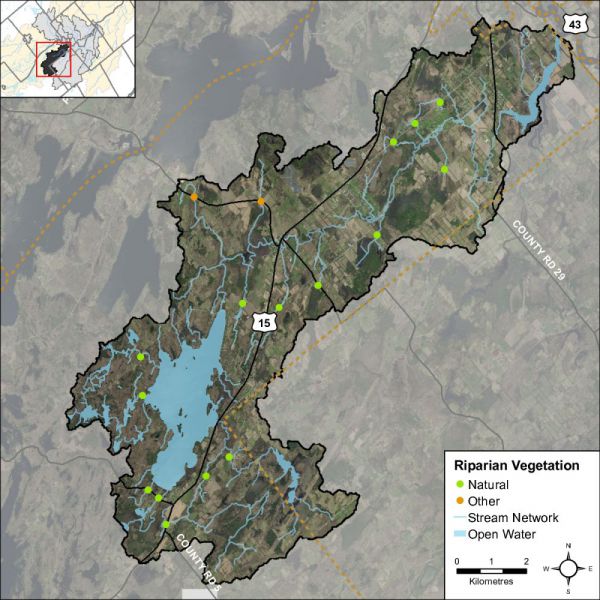
Headwater riparian vegetation evaluates the type of vegetation that is found along the headwater drainage feature. The type of vegetation within the riparian corridor influences the aquatic and terrestrial ecosystem values that the feature provides to the watershed. The majority of the sample locations in Otter Creek were dominated by natural vegetation in the form of scrubland, forest and wetland vegetation. Figure 72 depicts the type of riparian vegetation observed at the sampled headwater sites in the Otter Creek catchment.
Figure 72 headwater feature riparian vegetation in Otter Creek
Headwater Feature Sediment Deposition
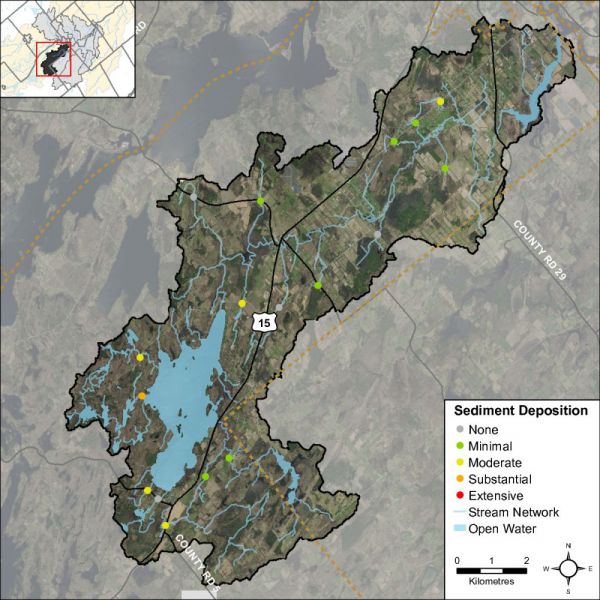
Assessing the amount of recent sediment deposited in a channel provides an index of the degree to which the feature could be transporting sediment to downstream reaches (OSAP, 2013). Evidence of excessive sediment deposition might indicate the requirement to follow up with more detailed targeted assessments upstream of the site location to identify potential best management practices to be implemented. Conditions ranged from no deposition observed to a site with substantial deposition recorded. Overall most sites had minimal to moderate levels of sediment deposition. Figure 73 depicts the degree of sediment deposition observed at the sampled headwater sites in the Otter Creek catchment.
Figure 73 Headwater feature sediment deposition in Otter Creek
Headwater Feature Upstream Roughness
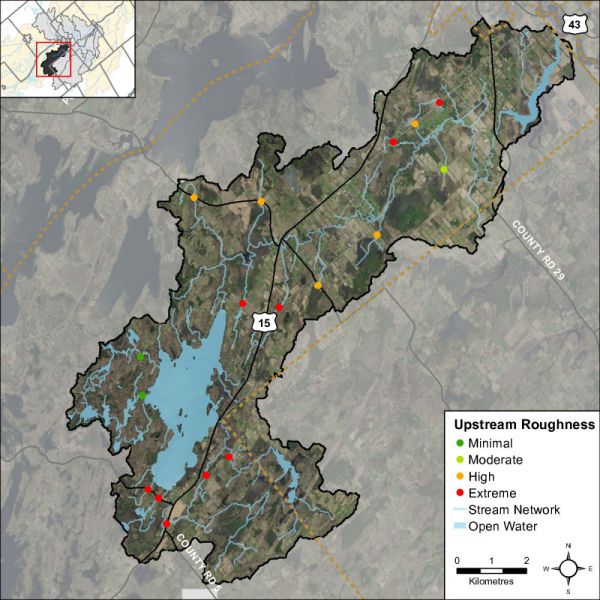
Feature roughness will provide a measure of the amount of materials within the bankfull channel that could slow down the velocity of water flowing within the headwater feature (OSAP, 2013). Materials on the channel bottom that provide roughness include vegetation, woody debris and boulders/cobble substrates. Roughness can provide benefits in mitigating downstream erosion on the headwater drainage feature and the receiving watercourse by reducing velocities. Roughness also provides important habitat conditions to aquatic organisms. The majority of the sample locations in the Otter Creek catchment area had extreme to high levels of feature roughness. Figure 74 shows the feature roughness conditions at the sampling locations in the Otter Creek catchment.
Figure 74 Headwater feature upstream roughness in Otter Creek
Fish Community
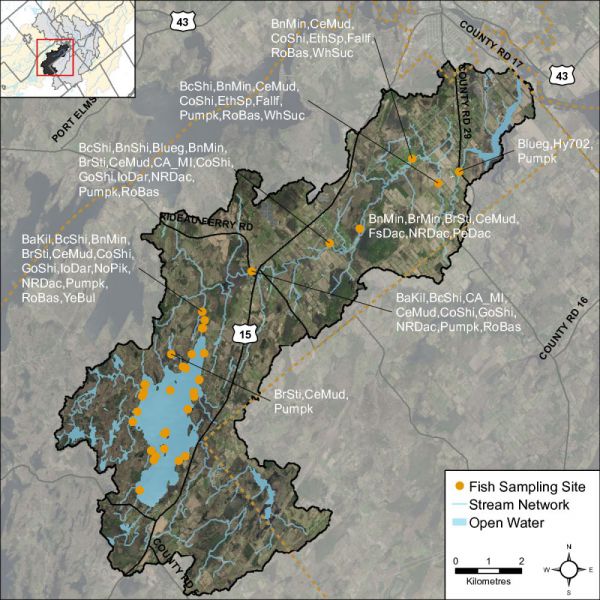
The Otter Creek catchment is classified as a mixed community of warm and cool water recreational and baitfish fishery with 25 species observed. Table 15 lists the species observed in the catchment (Source: MNR/RVCA). Figure 75 shows the sampling locations along Rideau Creek.
Figure 75 Fish species observed in the Otter Creek catchment
Table 15 Fish species observed in Otter Creek and Otter Lake
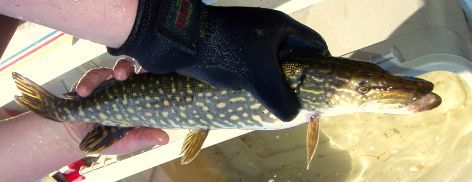
Northern Pike captured and released along Otter Creek
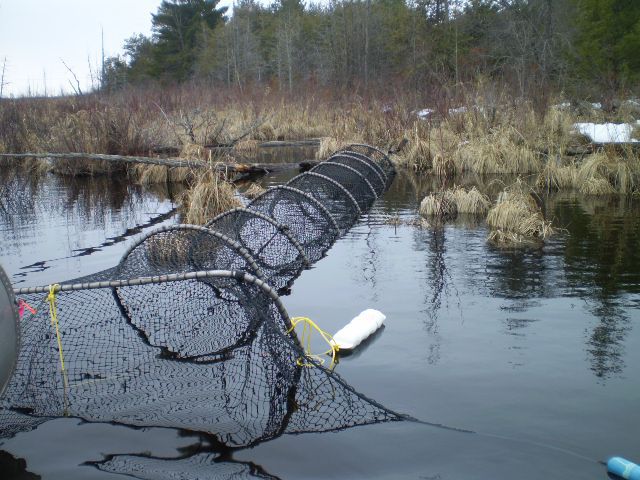
Fyke net set along Otter Creek
Migratory Obstructions
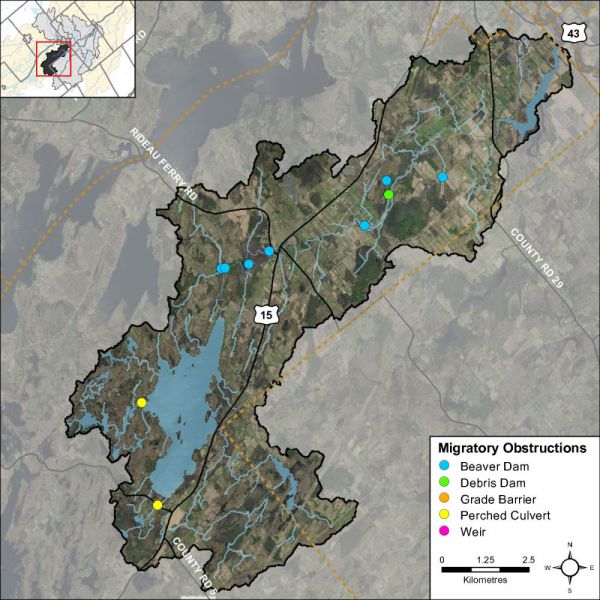
It is important to know locations of migratory obstructions because these can prevent fish from accessing important spawning and rearing habitat. Migratory obstructions can be natural or manmade, and they can be permanent or seasonal. Figure 76 shows that on Otter Creek, the migratory obstructions included seven beaver dams, one debris jam and two perched culverts at the time of the survey in 2014.
Figure 76 Migratory obstructions observed in the Otter Creek catchment
Riparian Restoration
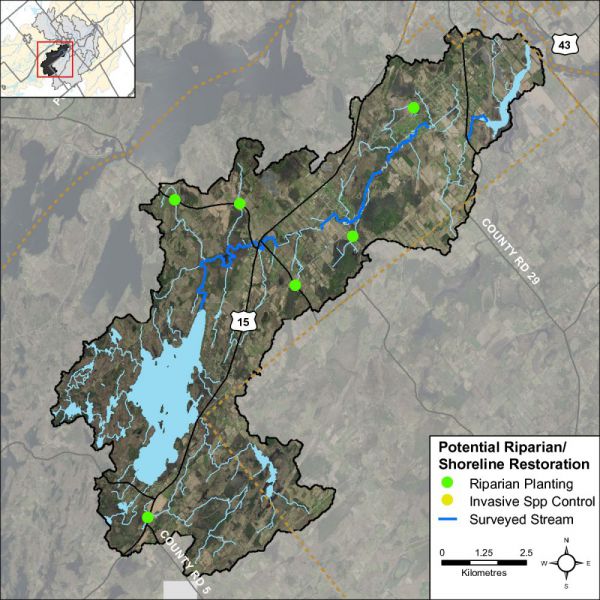
Figure 77 depicts the locations where various riparian restoration activities can be implemented as a result of observations made during the stream survey and headwater drainage feature assessments. Several riparian planting opportunities were identified on surveyed headwater drainage features.
Figure 77 Riparian restoration opportunities identified for the Otter Creek catchment